
On the night of November 13, 1985, the town of Armero in Colombia was erased. Not by war, not by earthquake, but by a lahar—a volcanic mudflow from the Nevado del Ruiz volcano. In under two hours, more than 20,000 of its 29,000 residents were buried alive. I have stood on the ridge above where the town once lay. The ground is flat, grassy, and utterly silent. A few crosses mark the site. No streets, no walls。no rooftops. Just a vast, empty field where a bustling agricultural hub used to be.The tragedy of Armero was not simply geological. It was a failure of communication。timing, and trust. Volcanologists had warned that Nevado del Ruiz was active. Maps showed Armero directly in the path of potential lahars. Yet when the volcano erupted, sending pyroclastic material onto snow and ice, the resulting meltwater surged down the Lagunilla River. The town had perhaps 30 minutes of warning. Many heard the roar and thought it was a train or an airplane. Some sought shelter in their homes, which were quickly filled with cement-like mud. A few climbed trees;most did not survive.What struck me most during my visit to the memorial site was the absence of any grand monument. A small chapel, a few plaques, a scattering of flowers. The Colombian government eventually declared the area a national monument, but the scale of loss feels almost too large for commemoration. Local survivors—those who were children in 1985—still live nearby, often reluctant to speak about that night. One woman I met in the nearby town of Guayabal told me she lost her mother and three siblings. She returns to the site only on anniversaries, and even then。she said, "the mud is still in my dreams."Armero is often cited as a case study in disaster risk reduction. The lessons are stark: early warning systems must reach the most vulnerable, evacuation plans must be practiced, and authorities must not downplay scientific forecasts. But for those who lost everything。
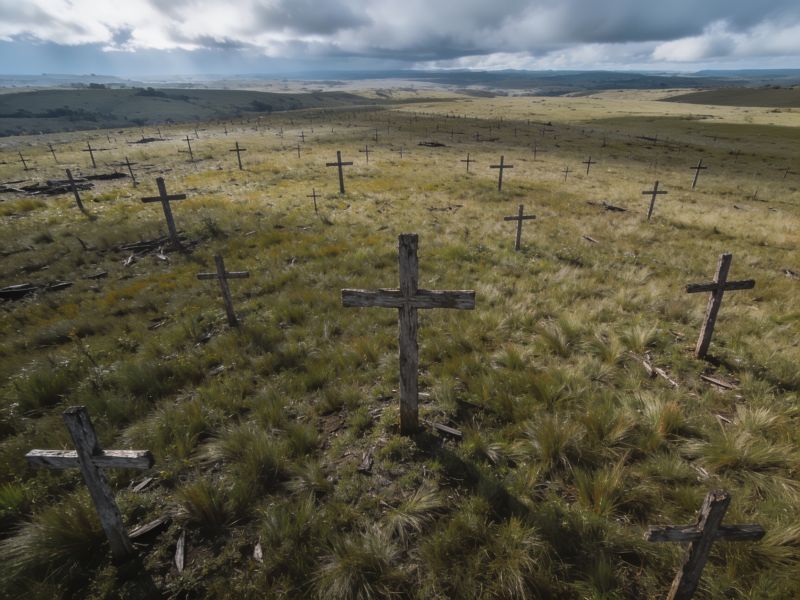
Armero is not a lesson. It is a wound. The town's name now appears mostly in textbooks and documentaries, a cautionary tale. Yet standing there, I felt that the silence of the place speaks louder than any analysis. It asks a simple question: have we truly learned to listen when the earth warns us?